Need roof replacement in Haverhill?
Ready to talk roofing? Request a callback to check provider availability, or send a request and a local provider in our network will follow up.
No obligation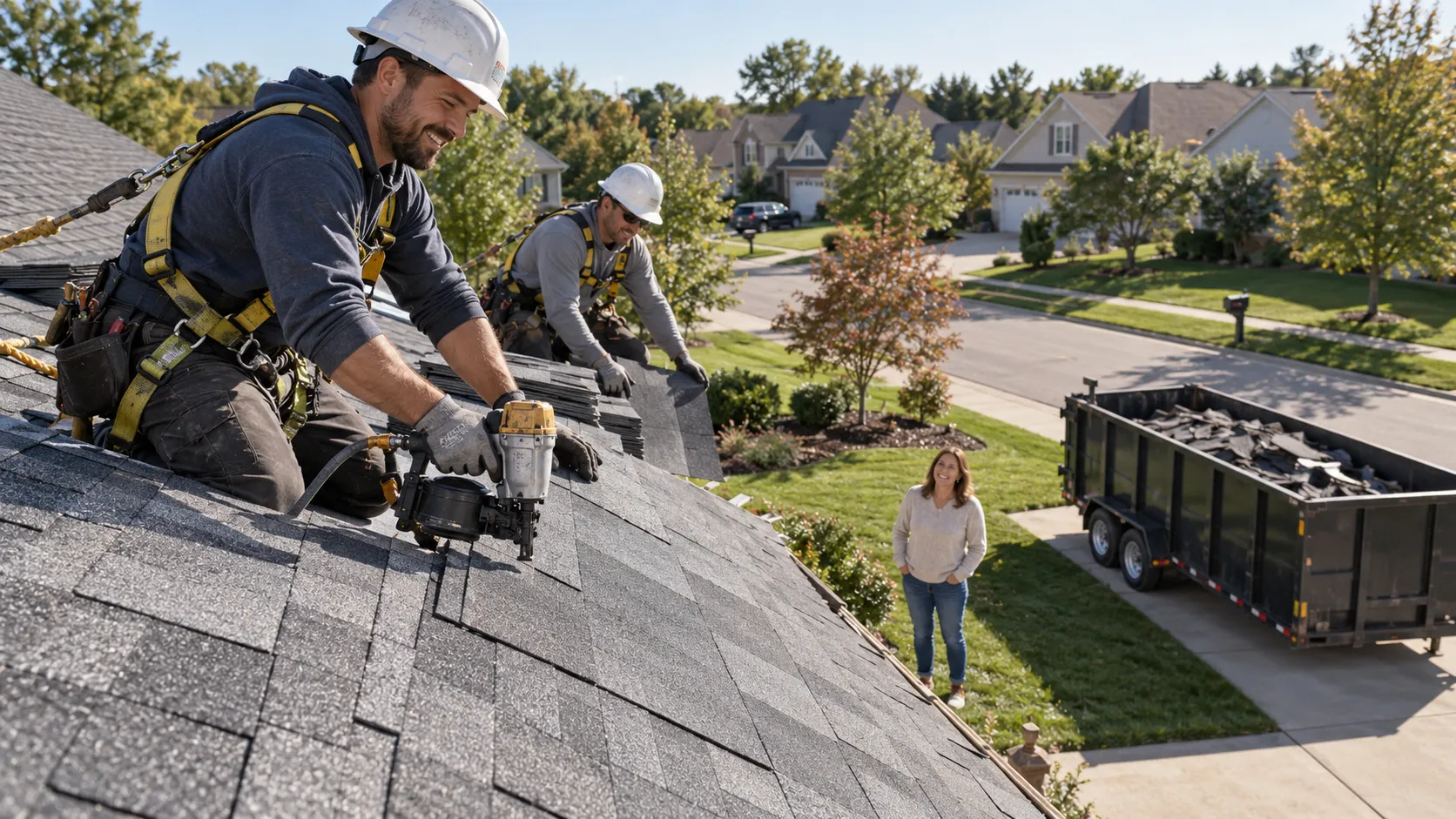
A roof replacement means the old roofing comes off and a new roof system goes on. It is a bigger job than patching one spot. Most homeowners look into it when the roof is old, worn in many places, or hurt by a hard storm. Challengefreedom Roofing is a referral service. It does not do the work. It connects you with an independent local provider in our network, and that provider handles the roof.
This page walks you through the choice in order. You will find the signs to check, what a full job includes, how materials compare, and what to ask before you sign. Then you can reach a provider in Haverhill or across the Haverhill area while the problem is still small, and request an estimate with no obligation to hire anyone.
Start with three questions. How old is the roof? Is it wearing out in more than one spot? Would a patch only delay the same job by a year or two?
If you answer yes to two of them, plan for replacement. Small problem first: the sooner a provider looks, the more choices you have on timing and materials. Request a callback to check provider availability.
Work through both lists below. Write down what you find and the date.
Many asphalt shingle roofs last roughly 20 to 30 years. Real life varies with sun, snow, ice, and how well the attic breathes.
Some steps are safe for any homeowner.
The rest needs a pro. Climbing a pitched roof, especially with snow or frost, is how people get hurt. Tear-off, deck work, and flashing need training, harnesses, and the right tools. Leave those to the provider.
Scopes differ, but a full job usually follows this order.
1. Inspect and measure. The provider checks the roof, the attic, and the edges. 2. Tear off. Old roofing and nails come off. 3. Check the deck. Soft or rotted boards get swapped. 4. Add protection. Ice barrier and underlayment go down first. 5. Set the metal. Drip edge and flashing go in around walls, chimneys, and vents. 6. Lay the new roofing. 7. Finish. Vents, cleanup, and a magnet sweep for stray nails.
Pick for your climate, your budget, and your house.
The most common choice. Lower upfront price and many styles. They handle most weather but age faster in harsh swings.
Costs more up front. Snow slides off easily, and it can last decades. Ask about noise and how it is fastened.
Composite, slate, and tile exist. They are heavy or costly. An older house may need a framing check first.
A roof-over puts new shingles on top of the old layer. It can cost less today. But it hides the deck, adds weight, and may not be allowed if layers already exist.
A full tear-off lets the provider see every board. In places with freeze-thaw cycles and heavy snow, many homeowners choose tear-off. Ask each provider to explain why they suggest one or the other.
Most areas require a permit for a new roof. Ask the provider who pulls it and whether the cost is in the quote.
Timing matters too. Spring and fall are busy. Cold snaps can slow shingle work, and rain delays any job. Book early, and keep a backup date in mind.
Older housing often brings extras. Steep pitches, small dormers, and multi-family rooflines take more time. Old decking may be thin or uneven.
Expect the provider to look closely at the attic, chimney, and ventilation. These details affect ice buildup in winter and how long the new roof lasts.
There are usually two kinds. One comes from the maker of the materials. The other comes from the provider for the labor.
Use this list with every local roofing contractor you talk to.
Get more than one quote if time allows. Compare scope, not only price.
Hail can bruise shingles and loosen granules without a visible hole. If you see dents, bare spots, or scattered debris, ask a provider to inspect.
A sudden leak may need emergency roof repair first. That is a separate job. Replacement planning comes after. Some policies may cover sudden damage, so check your policy. Providers can often help document damage for a claim. Storm damage repair and replacement are different scopes, so ask which one your roof needs.
Challengefreedom Roofing keeps the process short. First, you share a few details. Next, you are connected with an independent provider in our network. Then the provider reviews the roof and gives you a written quote.
Gather your photos, notes, and roof age. Then call or request an estimate. A provider can tell you if the roof needs replacing now or can wait a season.
Old shingles, nails, and worn underlayment come off so the deck can be checked.
Providers look for soft or rotted boards and swap them before new roofing goes on.
Ice barrier, underlayment, and drip edge help guard against snowmelt, wind-driven rain, and leaks.
Shingles or metal go on with flashing and vents, then the provider cleans up the site.
Prices vary by roof size, pitch, material, and local rates. These are typical U.S. ranges only. Ask each provider for a written quote that lists materials and labor.
| Item | Typical range | Notes |
|---|---|---|
| Asphalt shingle roof, average home | $6,000 – $14,000 | Size and pitch change the total |
| Metal roof, average home | $12,000 – $30,000 | Higher upfront cost, long lifespan |
| Tear-off and disposal | $1,000 – $3,000 | Extra layers add cost |
| Decking replacement | $2 – $5 per sq ft | Only where boards are damaged |
| Ice barrier and underlayment | $500 – $2,000 | Often needed in snowy climates |
| Flashing, vents, and chimney details | $300 – $1,500 | Older homes may need more |
Tell us the roof age, what you noticed, and any photos you took.
Challengefreedom Roofing matches you with an independent provider in our network.
The provider checks the roof and attic, then explains whether replacement makes sense.
Compare scope, materials, timing, and warranty before you choose anything.
One step connects you with an independent provider, so you spend less time sorting through listings.
Reaching a provider early can keep a worn roof from turning into a bigger repair bill.
Providers in our network work in your area and know local weather, codes, and house styles.
Request an estimate, compare it, and decide on your own schedule. You are never required to hire.
Ready to talk roofing? Request a callback to check provider availability, or send a request and a local provider in our network will follow up.
No obligationAge, spread, and repeat problems are the clues. If the roof is near the end of its life or wearing out in many places, a provider may suggest replacement. Ask for the reasoning in writing.
Many average homes take a few days, but weather, roof size, steep pitch, and deck repairs can stretch that. Ask the provider for a realistic schedule and a backup plan for rain or snow.
Some policies may cover sudden damage, such as storm or hail. Wear and age usually are not covered. Check your policy, and ask a provider to help document damage.
Ready to talk roofing? Request a callback to check provider availability, or send a request and a local provider in our network will follow up.
No obligation